
School of Theology, Boston University
Designing a Platform for Reflection
School of Theology needed more than a traditional admissions website—it needed a platform that could support exploration, uncertainty, and personal calling. Rather than pushing users toward predefined outcomes, we designed a digital experience centered on reflection, values, and discovery.
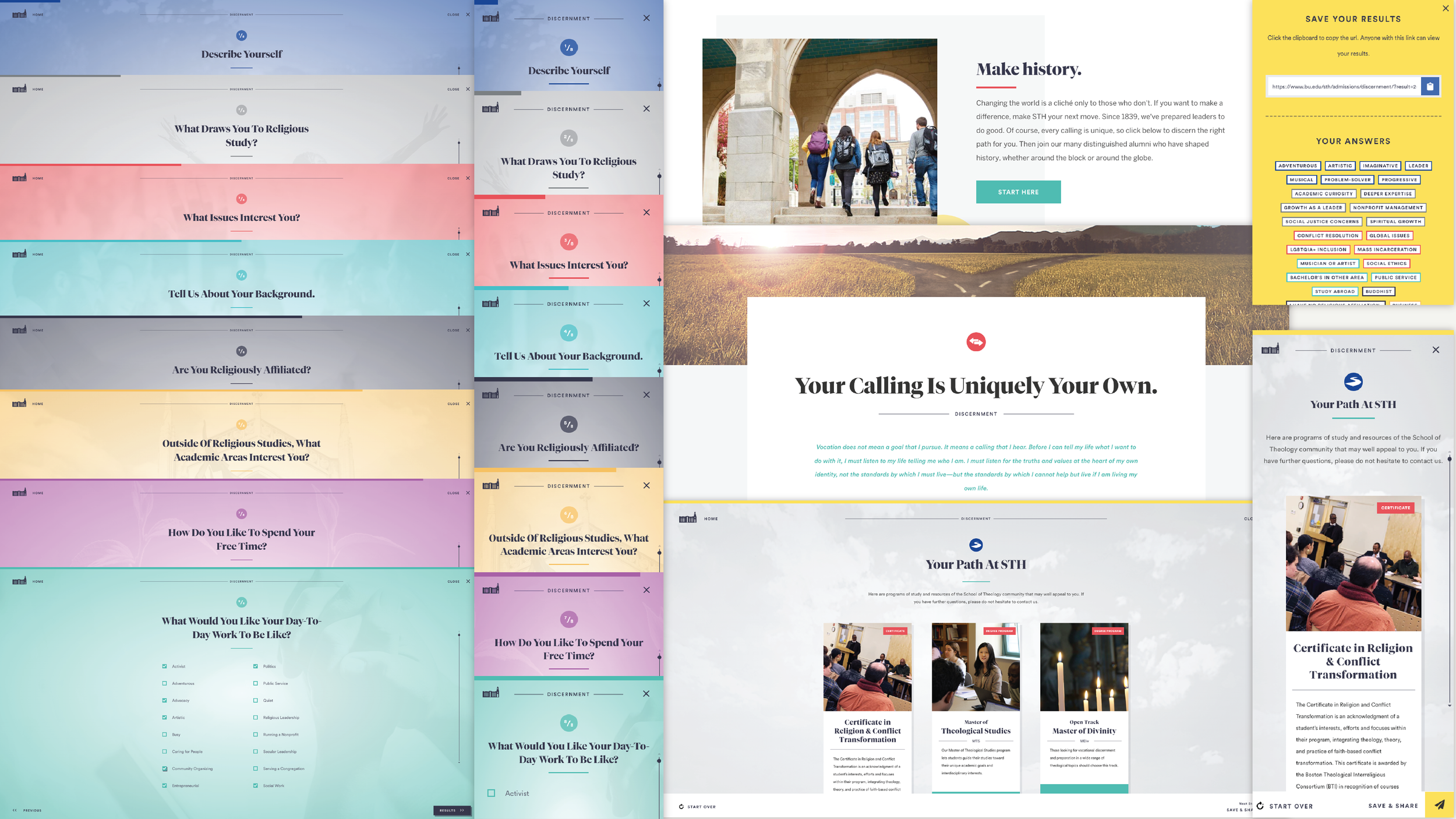
At the core of the site is the Discernment Tool, which translates institutional content into a personalized, non-prescriptive experience. The result is a scalable digital platform that meets individuals where they are, supports multiple paths forward, and reflects the School’s mission through experience—not just messaging.
I served as the Creative Director for Design, Content Strategy, and Development, leading a cross-disciplinary team of eight and working closely with CFA leadership to reshape how the college presents itself to the world.
Guiding Exploration Through Design
The Discernment Tool begins with a series of questions that invite prospective students to reflect on their motivations, values, and aspirations. Instead of matching people to programs through rigid filters, the system uses tagging and content relationships to surface pathways that feel relevant and meaningful to each user. The experience is intentionally open, allowing space for uncertainty while still providing structure and clarity.
Working closely with faculty and School of Theology leadership, we translated the language of discernment into interaction patterns and content models that feel supportive rather than directive. We refined question framing, visual tone, and interaction flow to ensure the tool felt personal, mobile-friendly, and lightweight enough to support short moments of exploration—yet strong enough to guide someone forward when they are ready.
Experience Principles
Reflection, not persuasion
Each interaction is designed to help users articulate who they are and what they value.Invitation, not instruction
Users receive curated suggestions based on their input, without deterministic outcomes.Clarity that respects complexity
Content and design work together to simplify choices without flattening nuance.Scalable by design
The tagging system and logic model support additional programs, audiences, and resource types over time.
My Role
Creative Director for Design, Strategy, and Development
Led concept development, design direction, interaction flow, narrative framing, content mapping, and cross-team collaboration across design, development, content strategy, and leadership stakeholders.
Outcome
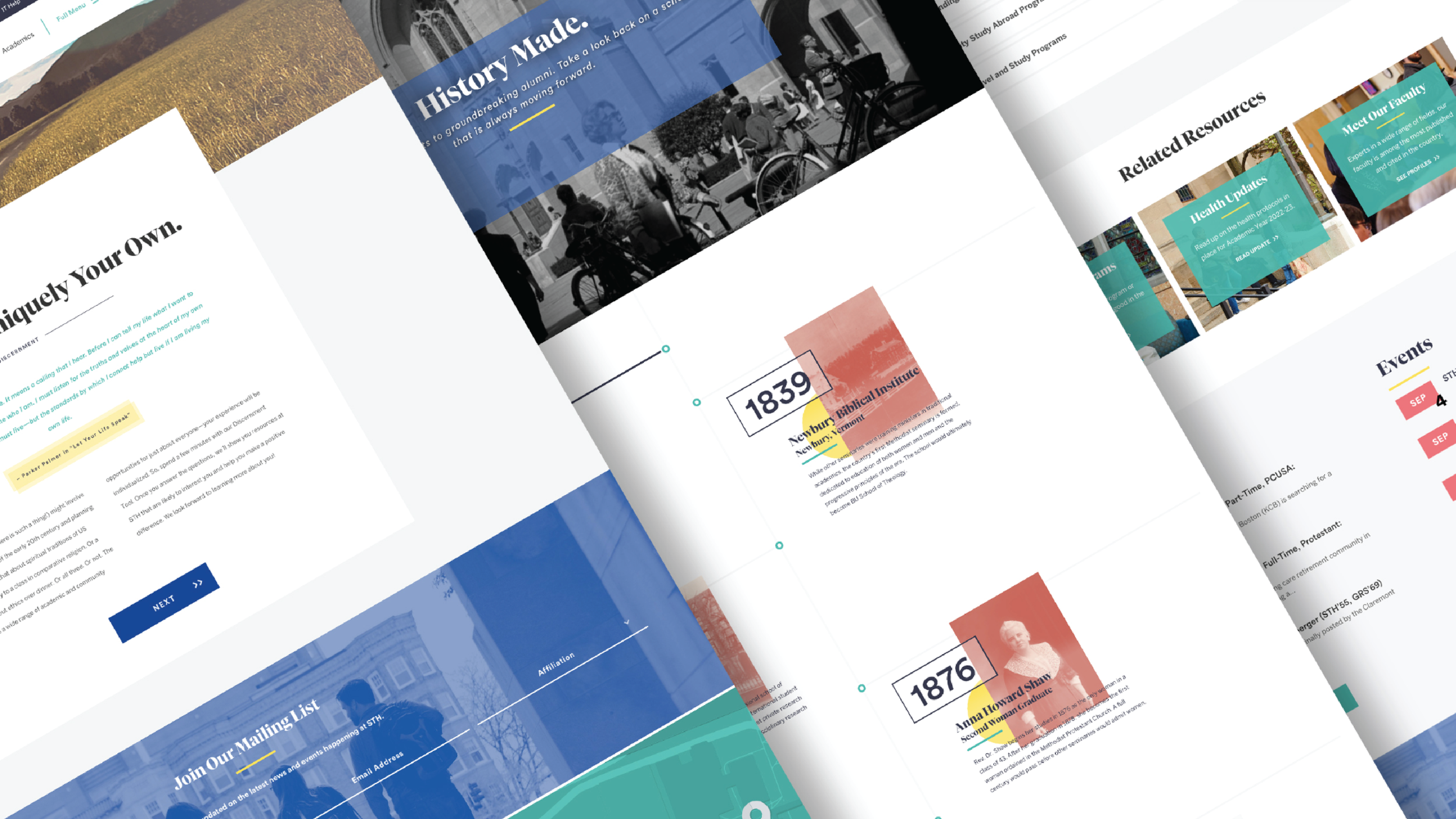
A digital discernment experience that reflects the School of Theology’s mission through interaction and tone—helping prospective students explore who they are, imagine who they might become, and move toward programs and pathways with confidence
Project Type
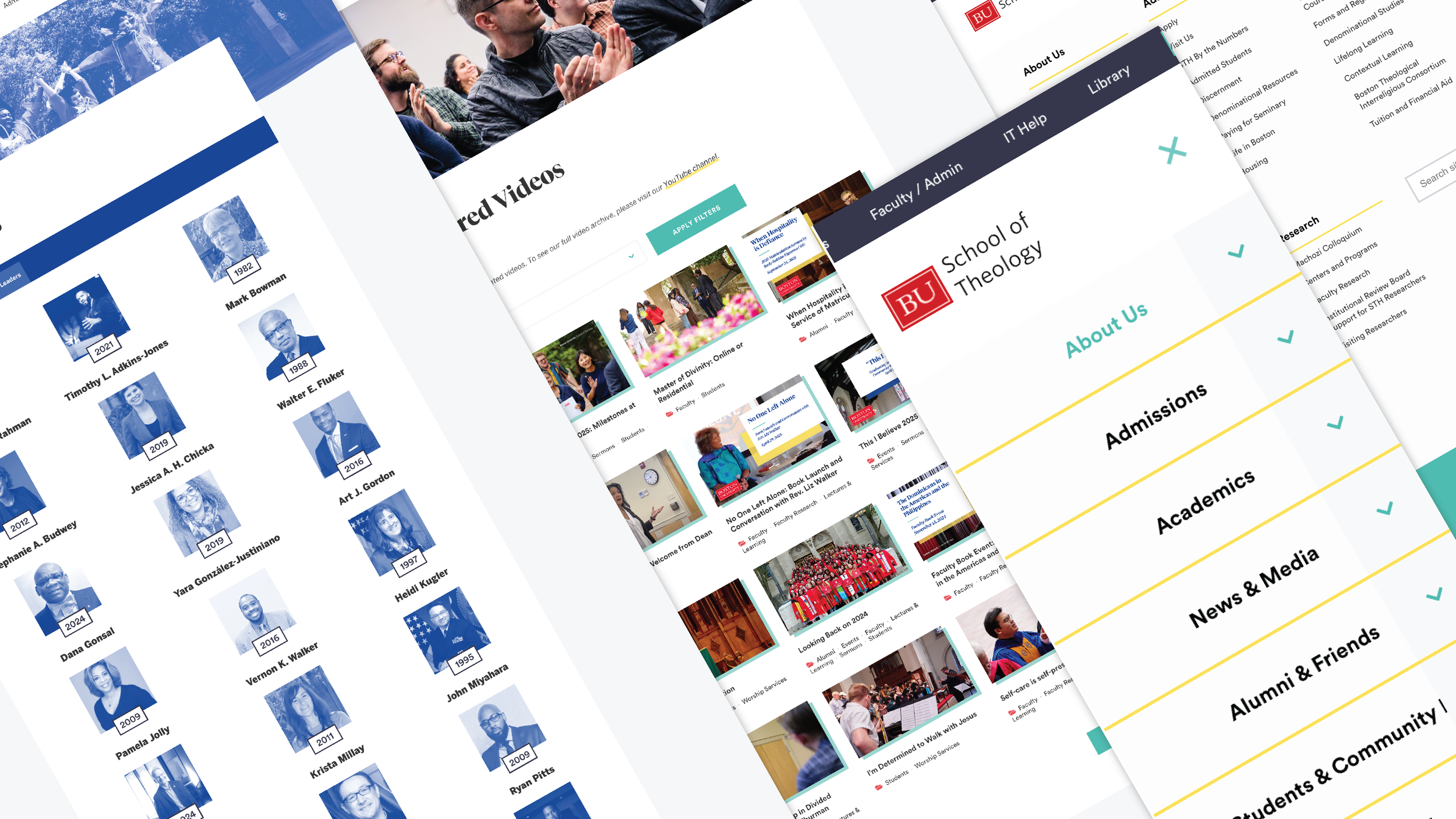
Digital Experience — Strategy, Creative Direction, Design, Content, Collaboration