
From Uncertainty to Opportunity
Reimagining the Graduate Student Experience at Boston University
Experience Strategy / Creative Direction / Stakeholder Collaboration / UX Design
The Challenge
Prospective graduate students don't all begin their journeys in the same place.
Some know exactly what they want to study and are ready to compare programs. Others are considering a career change, exploring new opportunities, or trying to understand how graduate education might fit into their lives.
For Boston University's Graduate Education team, the challenge was to create a more supportive experience for students who weren't yet ready to choose a program or apply.
Rather than immediately directing visitors toward a program search, we saw an opportunity to help them understand their options, build confidence, and discover a path forward.
My Role
Creative Direction, Experience Strategy & Collaborative Leadership
I developed and led a project-specific discovery and collaboration process, bringing together a multidisciplinary Creative Services team and stakeholders from Graduate Education.
Our internal team included an account executive, project manager, lead designer, developer, and analytics specialist.
My responsibility was to guide our team, establish the strategic and creative direction, and facilitate a series of working sessions that encouraged our Graduate Education partners to actively participate in developing the experience.
Rather than presenting predetermined solutions, I structured the sessions to open conversations, challenge assumptions, build shared understanding, and allow ideas to evolve collaboratively.
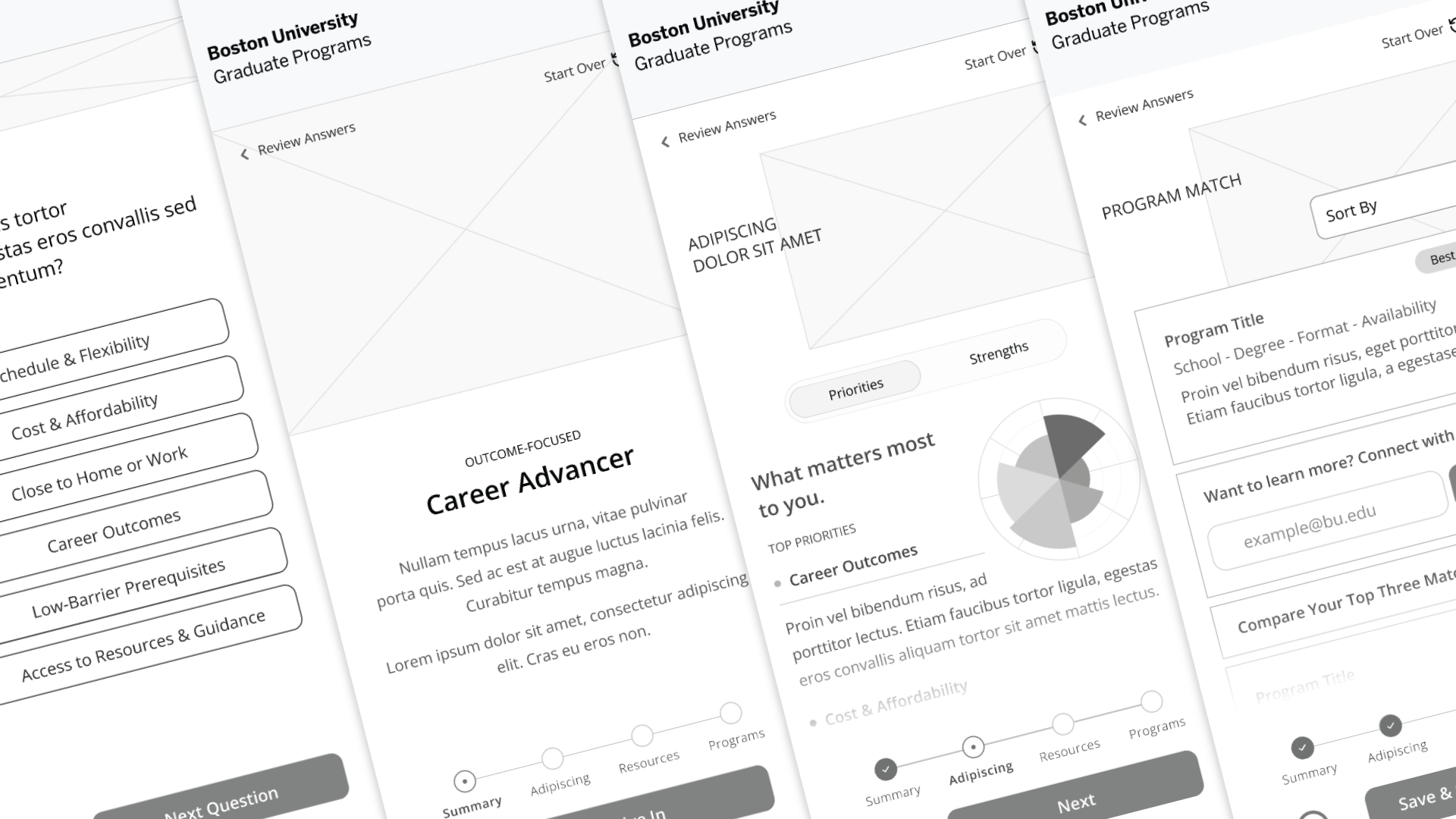
Our lead designer translated the resulting direction into desktop and mobile wireframes under my creative direction.
Creating Space for Collaboration
We began by establishing a shared understanding of the problem.
Over six collaborative sessions, I guided both teams through a structured progression of discovery, research, discussion, concept development, and experience planning.
Each session built on the previous one. I developed and used presentations as working tools—not simply to communicate decisions, but to revisit discoveries, introduce new perspectives, and encourage meaningful participation.
The process was intentionally collaborative. Graduate Education brought its knowledge of prospective students, academic programs, and recruitment challenges. Our creative team contributed research, analytics, experience strategy, and design expertise.
Together, we moved from an initially broad challenge toward a more focused experience concept.
[IMAGE 03 — THE COLLABORATIVE PROCESS]
Create a horizontal composition featuring three selected workshop slides:
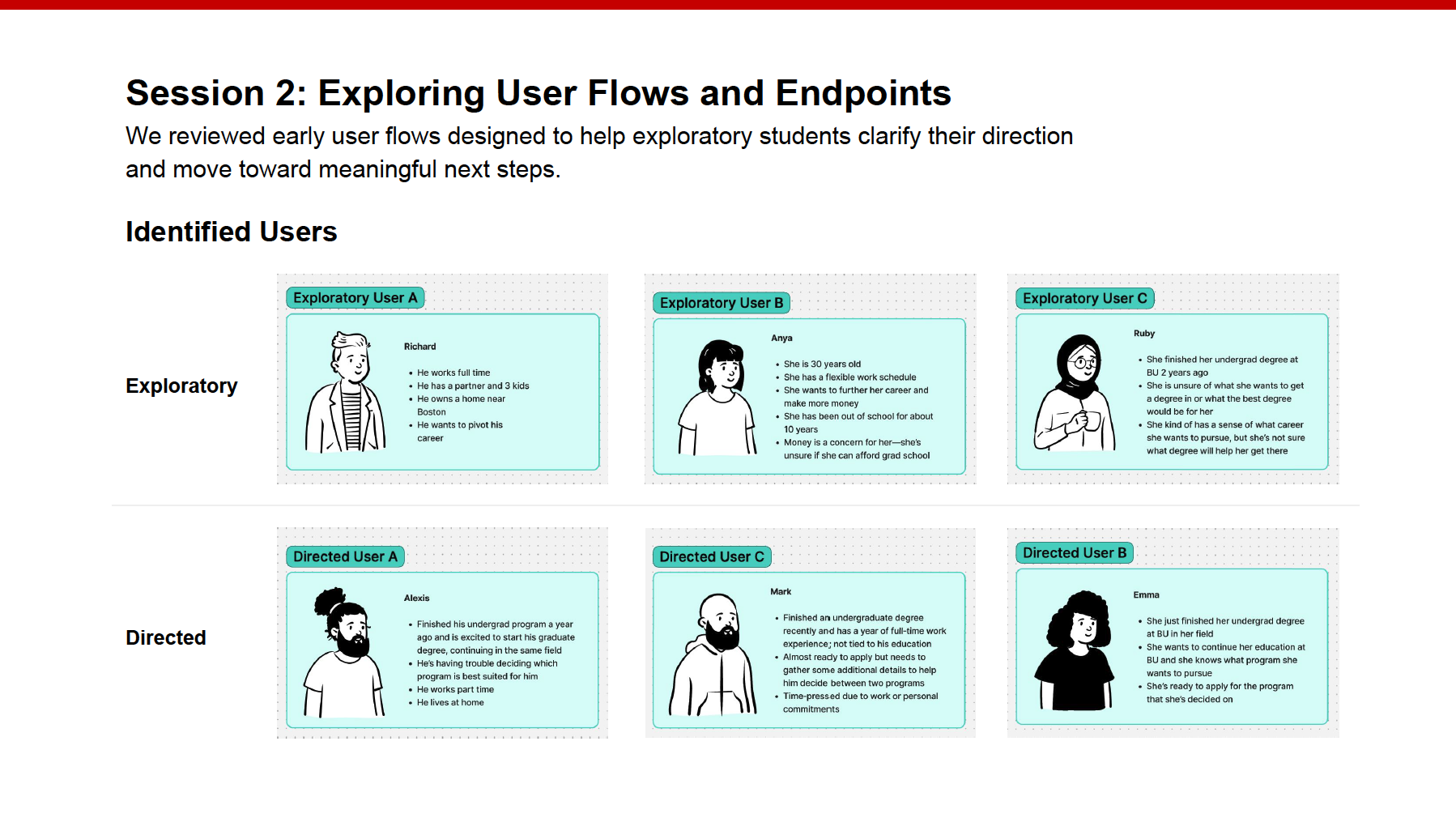
Session 2: Student journey and user exploration
Session 3: Research themes and stakeholder discussion prompts
Session 4: Emerging student archetypes
If available, add an authentic photograph of a working session. Otherwise, use the original slides.
Suggested caption: A series of facilitated working sessions helped both teams explore student needs, challenge assumptions, and establish a shared direction.
Understanding the Student Journey
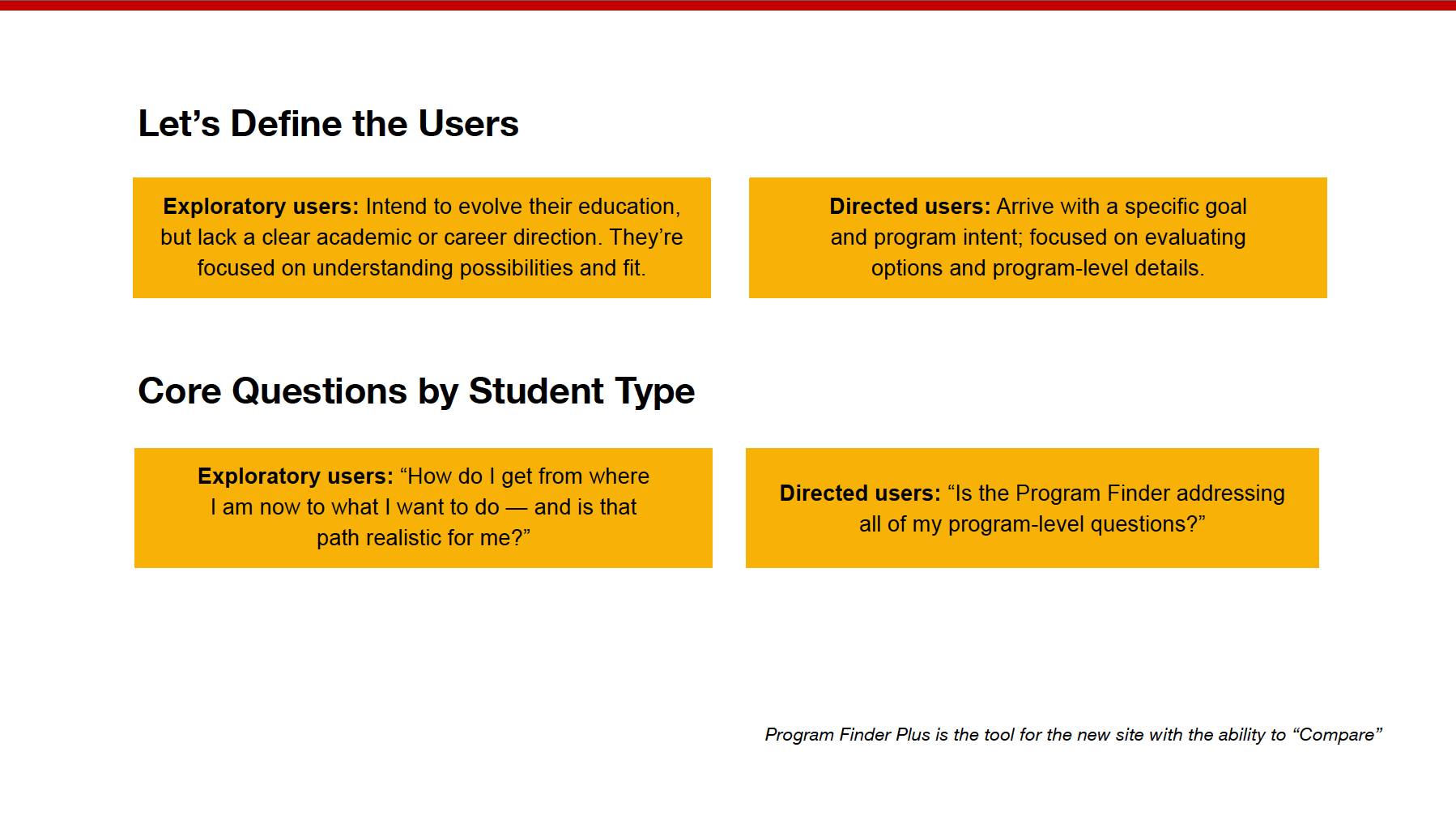
Our early conversations and supporting research revealed two distinct student mindsets.
Exploratory Students
Prospective students interested in continuing their education but uncertain about their academic direction, career goals, or available opportunities.
Directed Students
Prospective students with clearer goals who are ready to evaluate specific programs, requirements, and next steps.
This distinction became foundational to our approach.
We recognized that a traditional program finder could serve directed students effectively, but exploratory students needed something different: guidance before selection.
Through research reviews, collaborative exercises, and stakeholder discussions, we explored the circumstances influencing prospective graduate students' decisions.
Several recurring themes emerged:
Balancing graduate education with work, family, and other responsibilities.
Understanding affordability and potential return on investment.
Connecting existing experience with new academic or career opportunities.
Evaluating program flexibility, formats, and requirements.
Building confidence before committing to the application process.
These discoveries helped us define what the experience needed to accomplish.
It wasn't simply about helping students find a degree. It was about helping them see a realistic path from where they are today to where they want to go.
From Discovery to Direction
With a shared understanding of the student journey, we began exploring how a guided experience could support prospective students earlier in their decision-making process.
The concept centered on a short series of intentional questions designed to understand a student's goals, circumstances, interests, and priorities without overwhelming them.
Rather than creating a complex diagnostic tool, we focused on making the interaction approachable, conversational, and useful.
Working with Graduate Education, we explored which questions would provide meaningful context, what supportive content could realistically be offered, and how the experience could connect students to relevant academic programs.
The resulting direction was a lightweight exploratory experience that could help students move from uncertainty toward more informed program discovery.
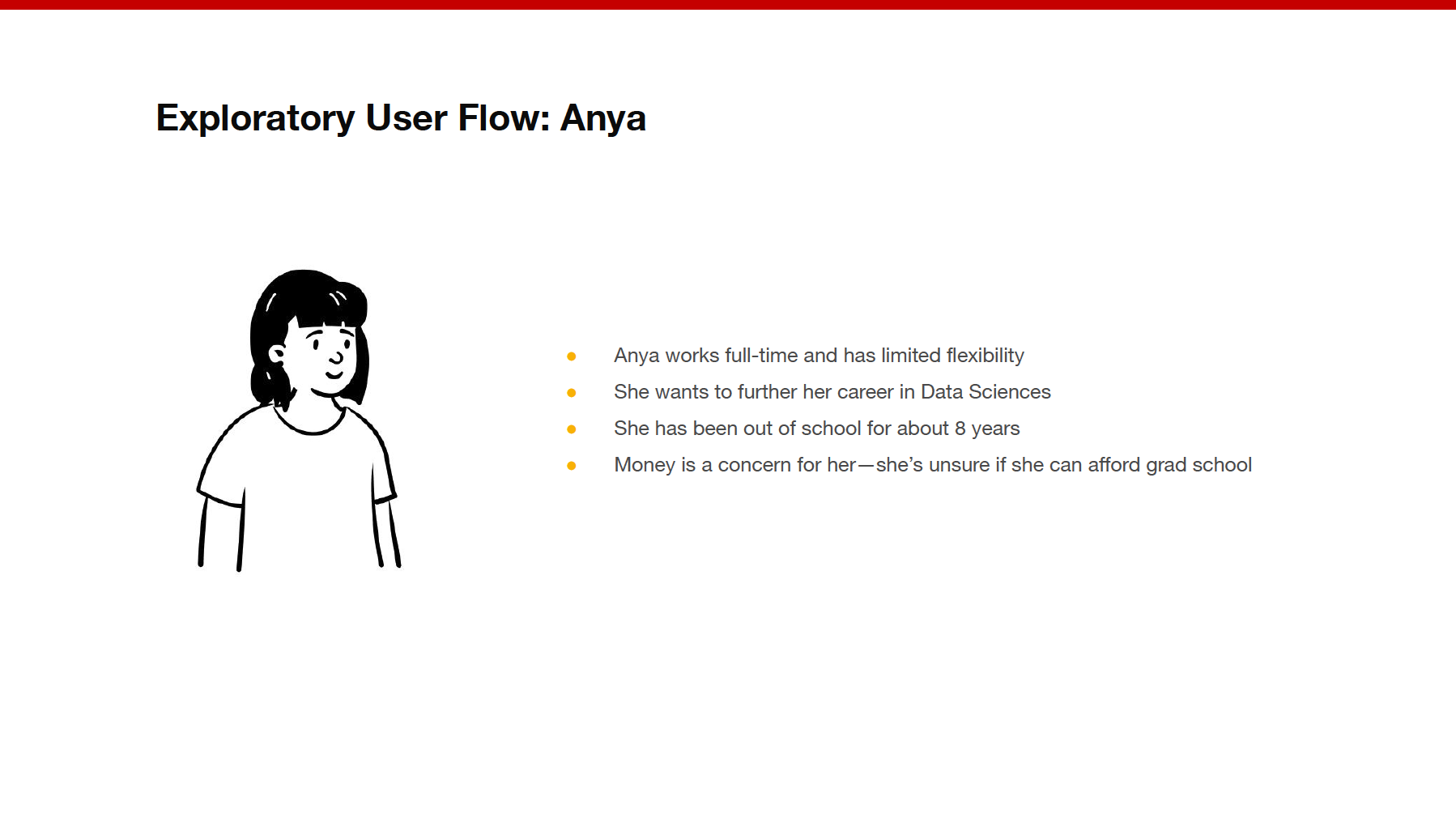
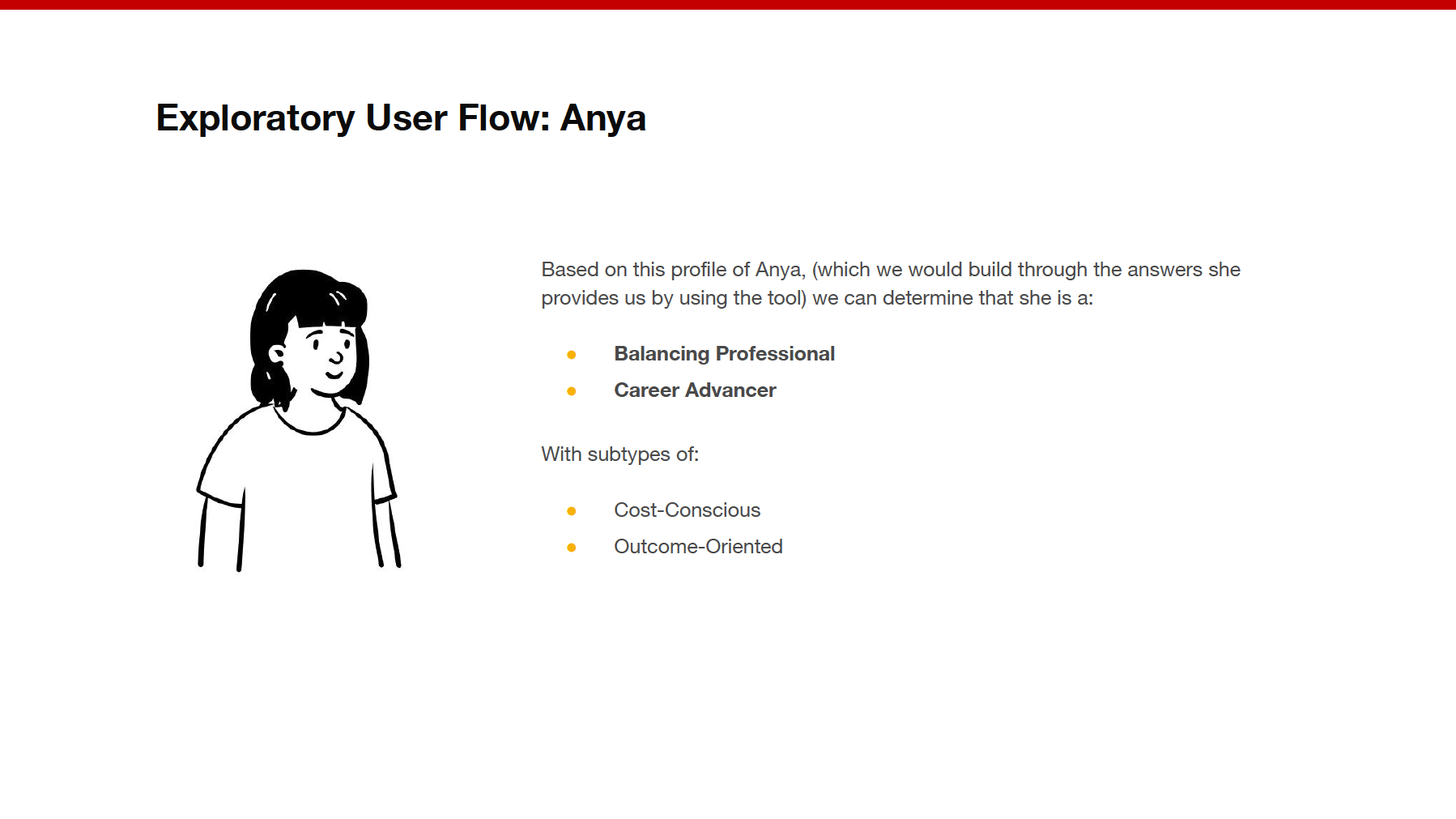
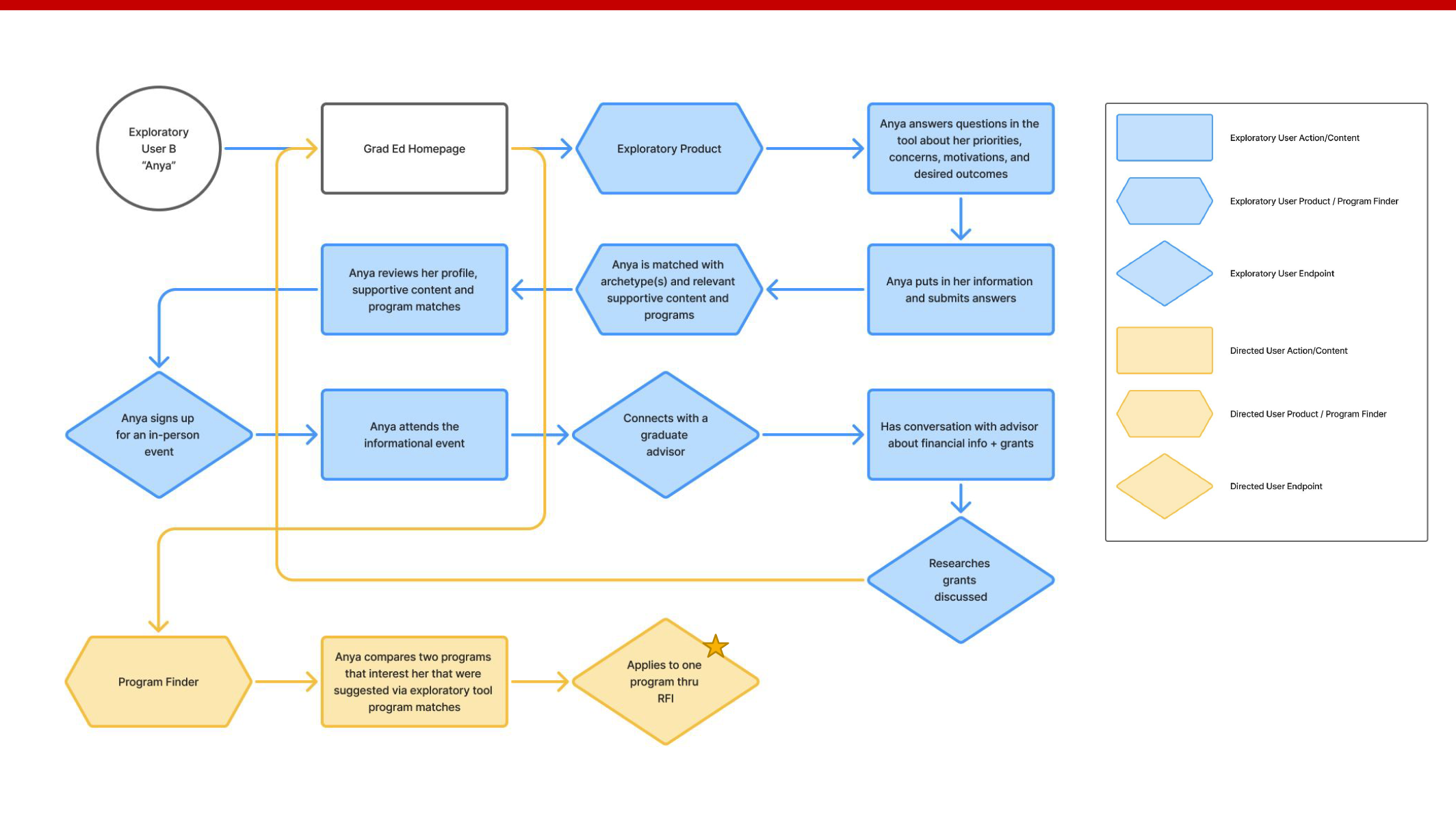
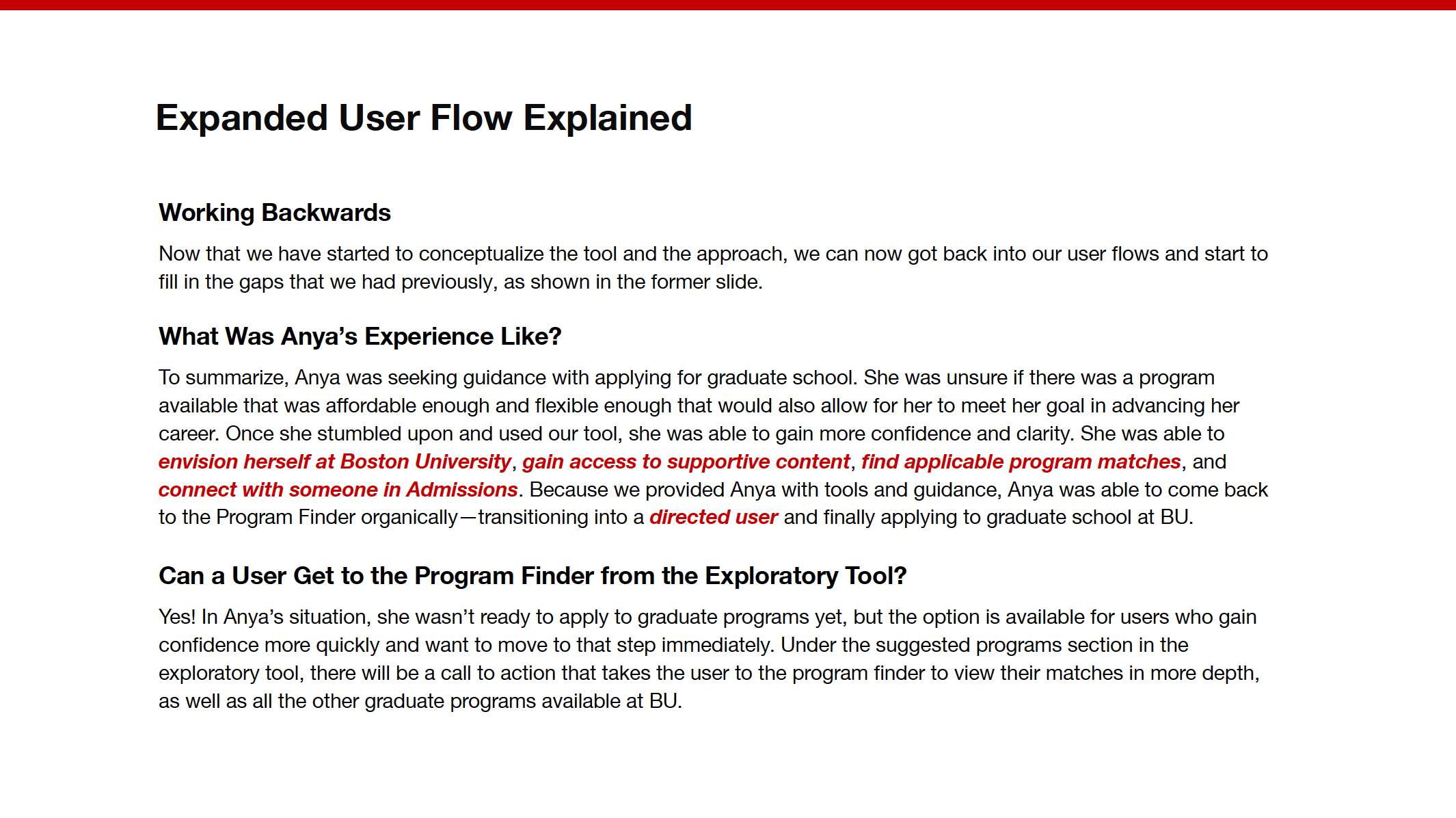
Scenario-based user flows helped connect student motivations and practical challenges to potential experience pathways.
Designing a More Supportive Experience
The proposed experience brought together four connected components.
01. Guided Discovery
A short, intentional questionnaire helps students reflect on their educational goals, personal circumstances, interests, and priorities.
02. Personalized Insights
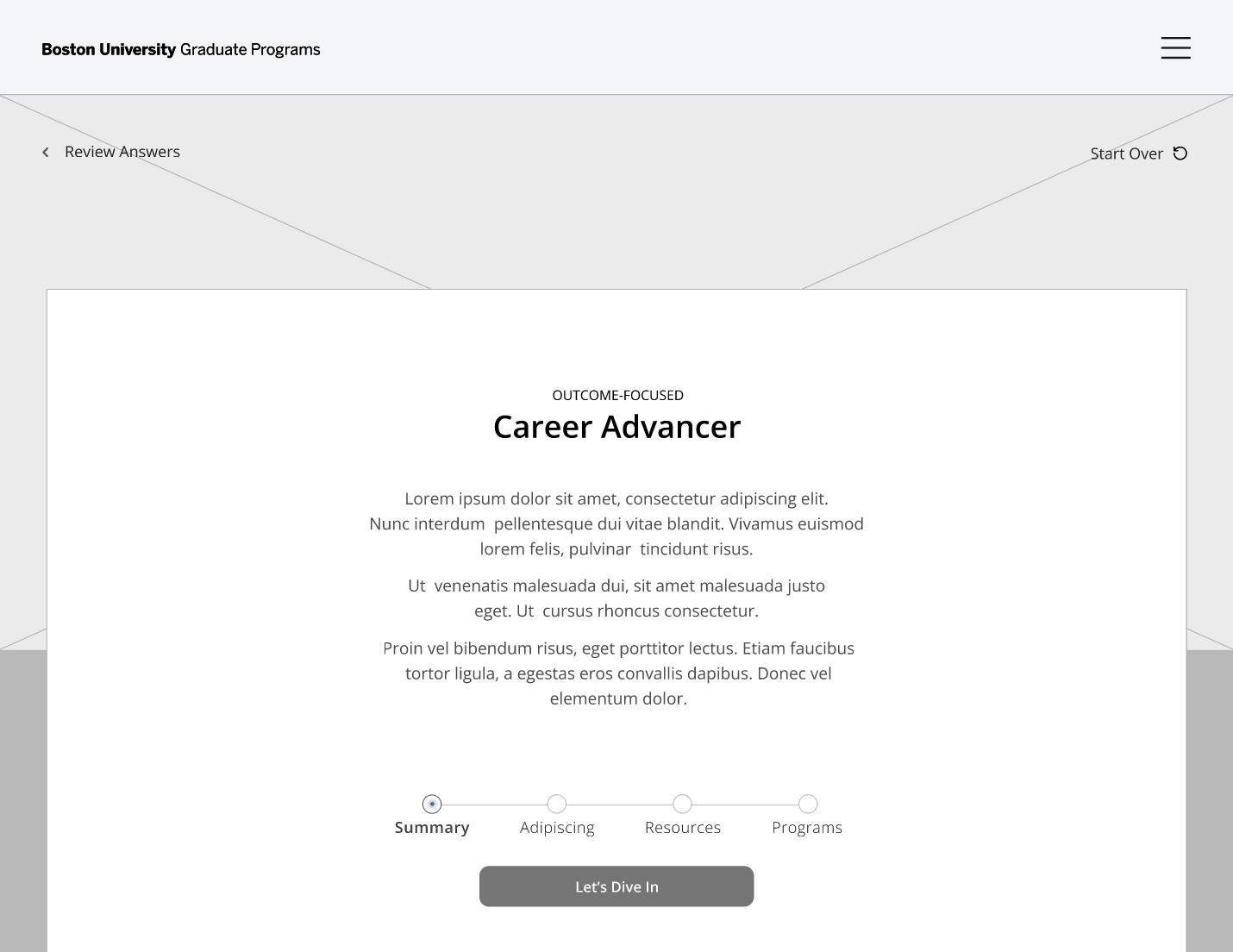
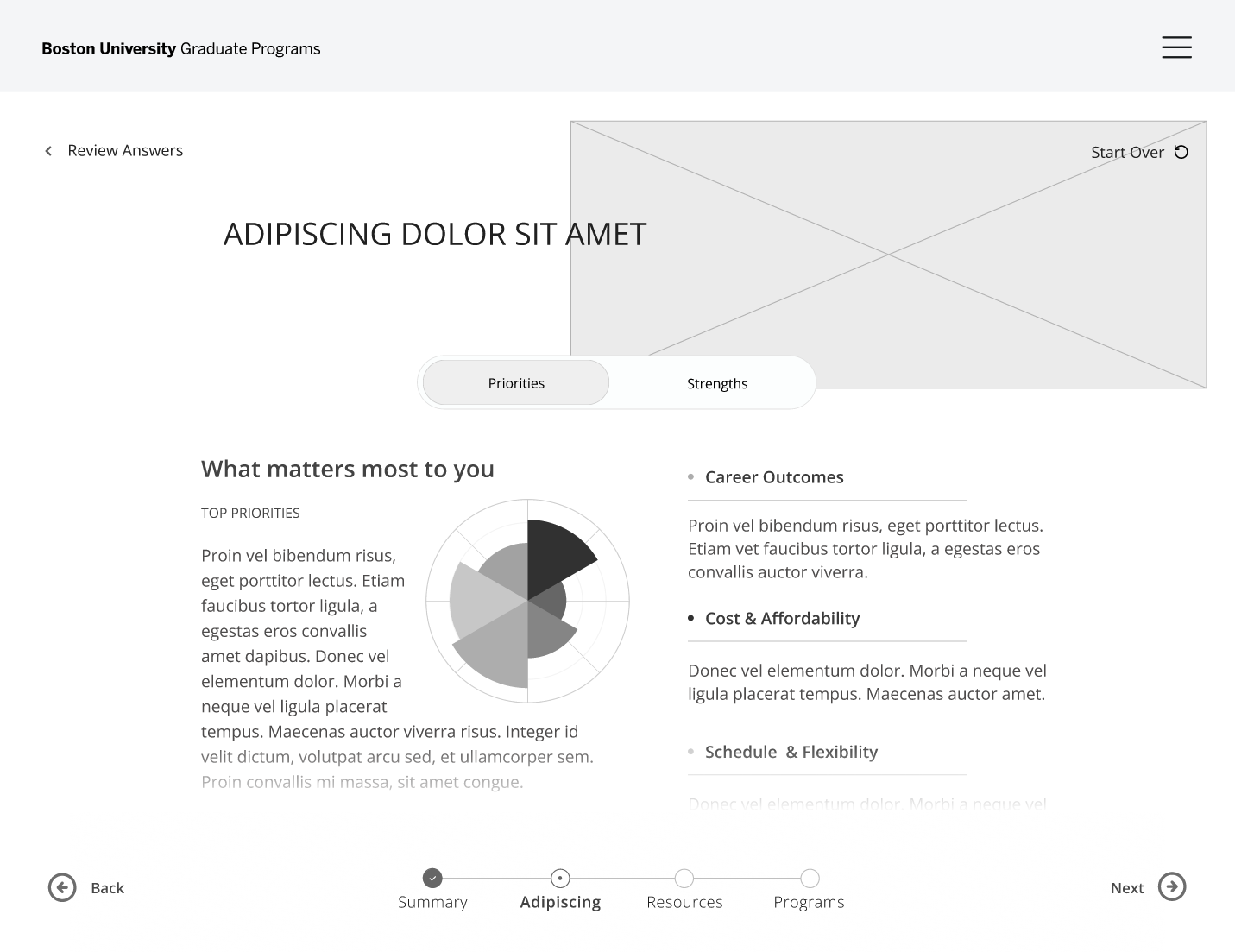
A student profile presents relevant motivations, strengths, and considerations to help visitors better understand their options.
03. Supportive Resources
Contextual guidance connects students with information about affordability, flexibility, academic pathways, career outcomes, and admissions support.
04. Program Exploration
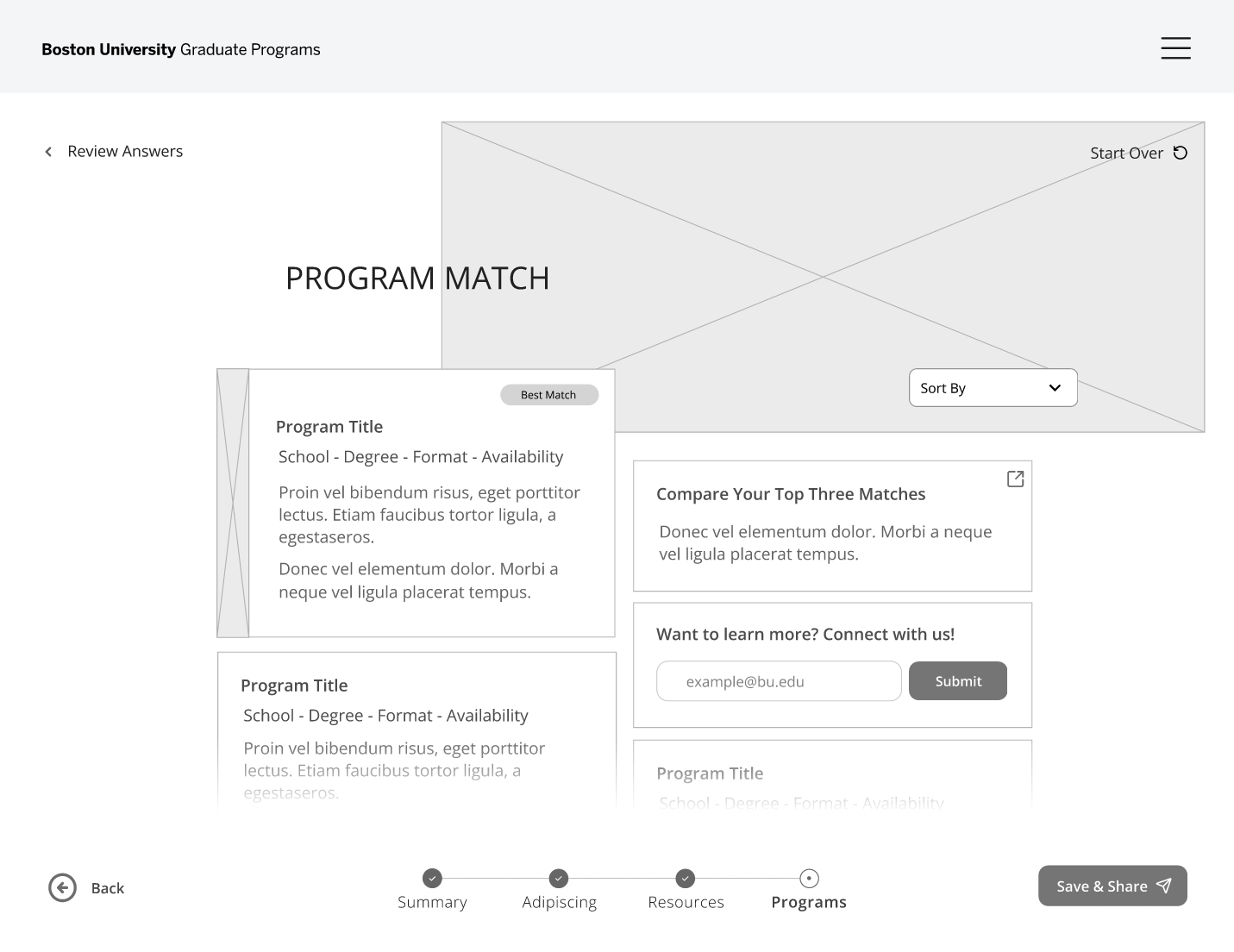
Relevant program recommendations provide a bridge to the university's broader Program Finder, helping students investigate opportunities and take meaningful next steps.
The goal wasn't to replace the program search experience. It was to create a more supportive path into it.
[IMAGE 06 — GUIDED DISCOVERY]
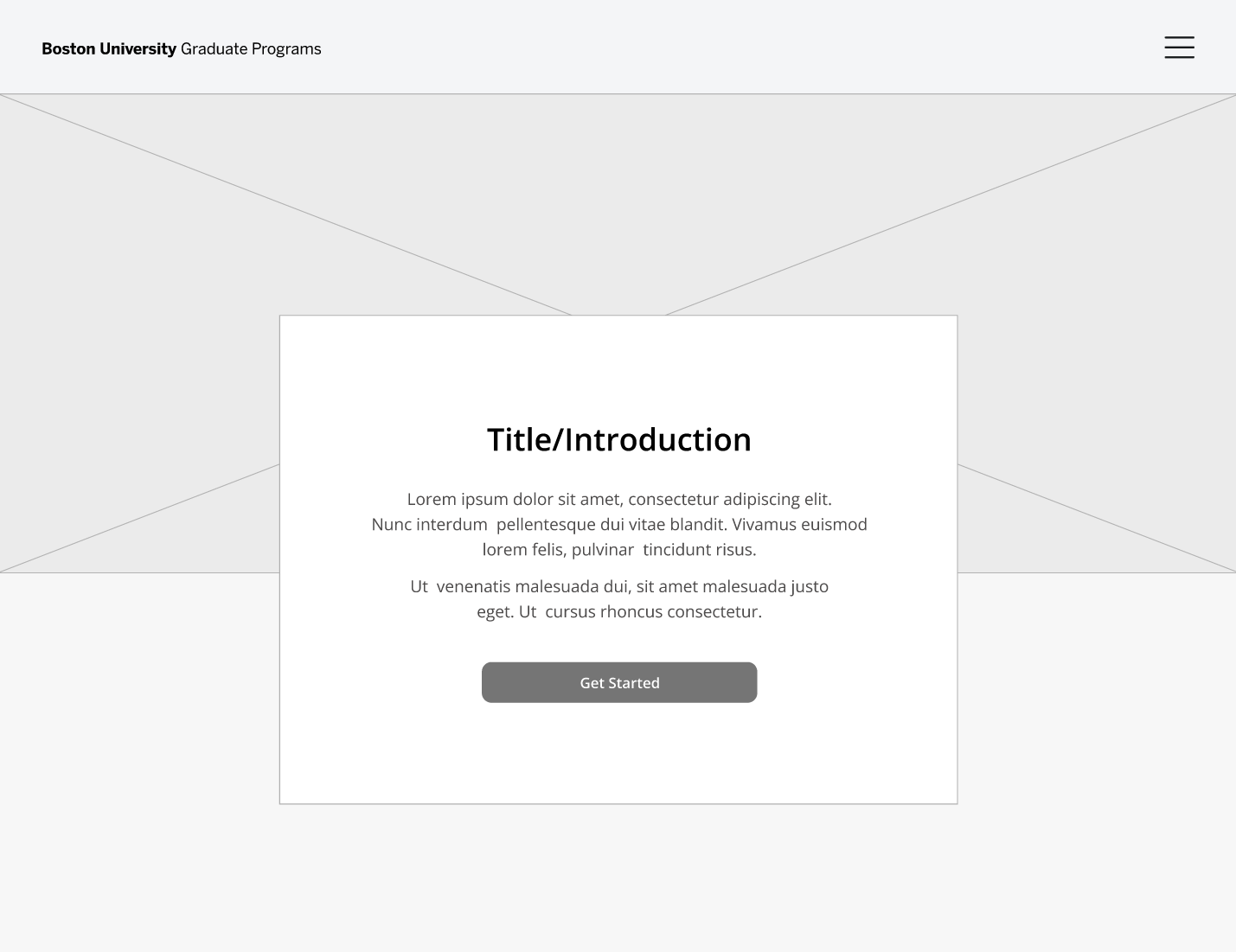
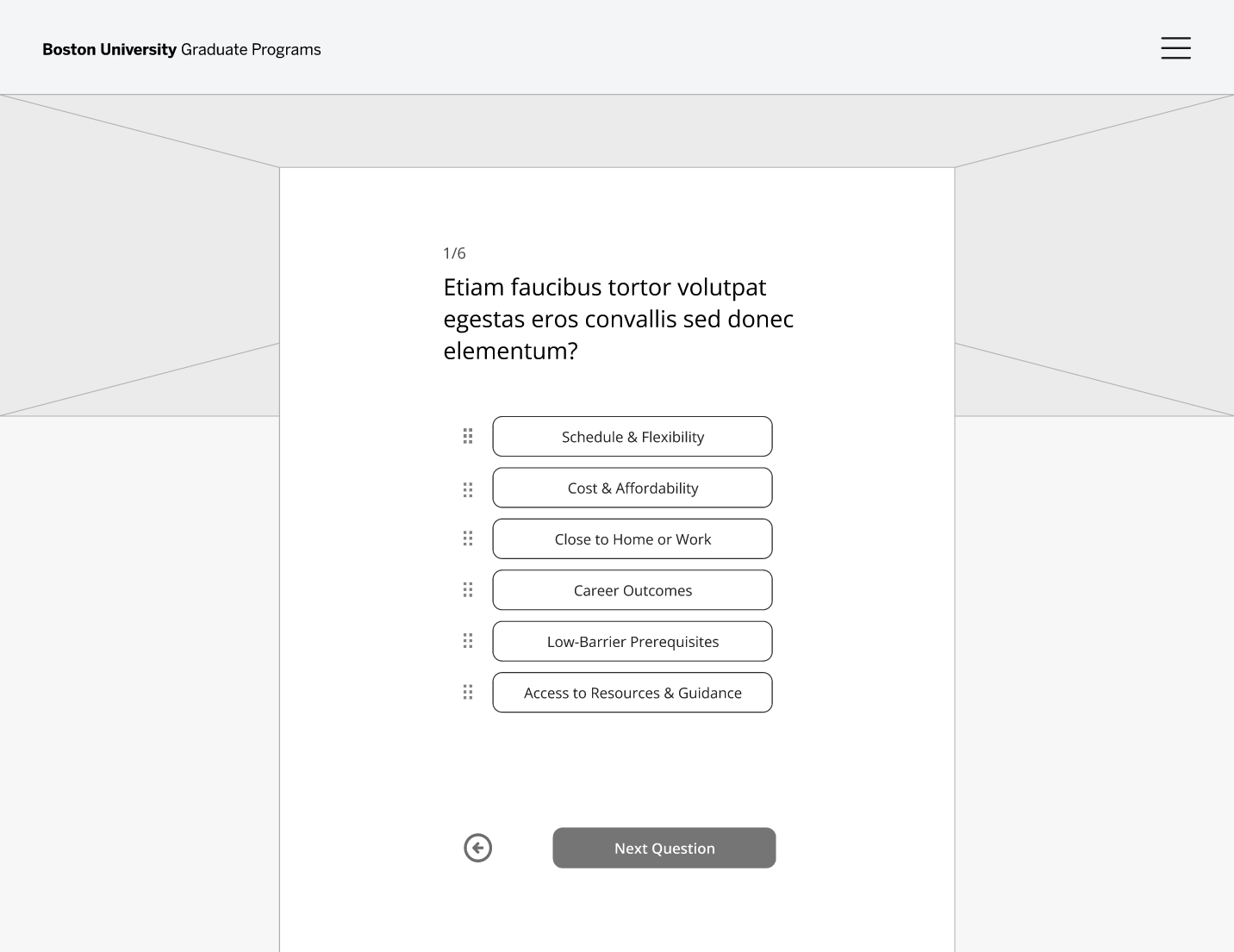
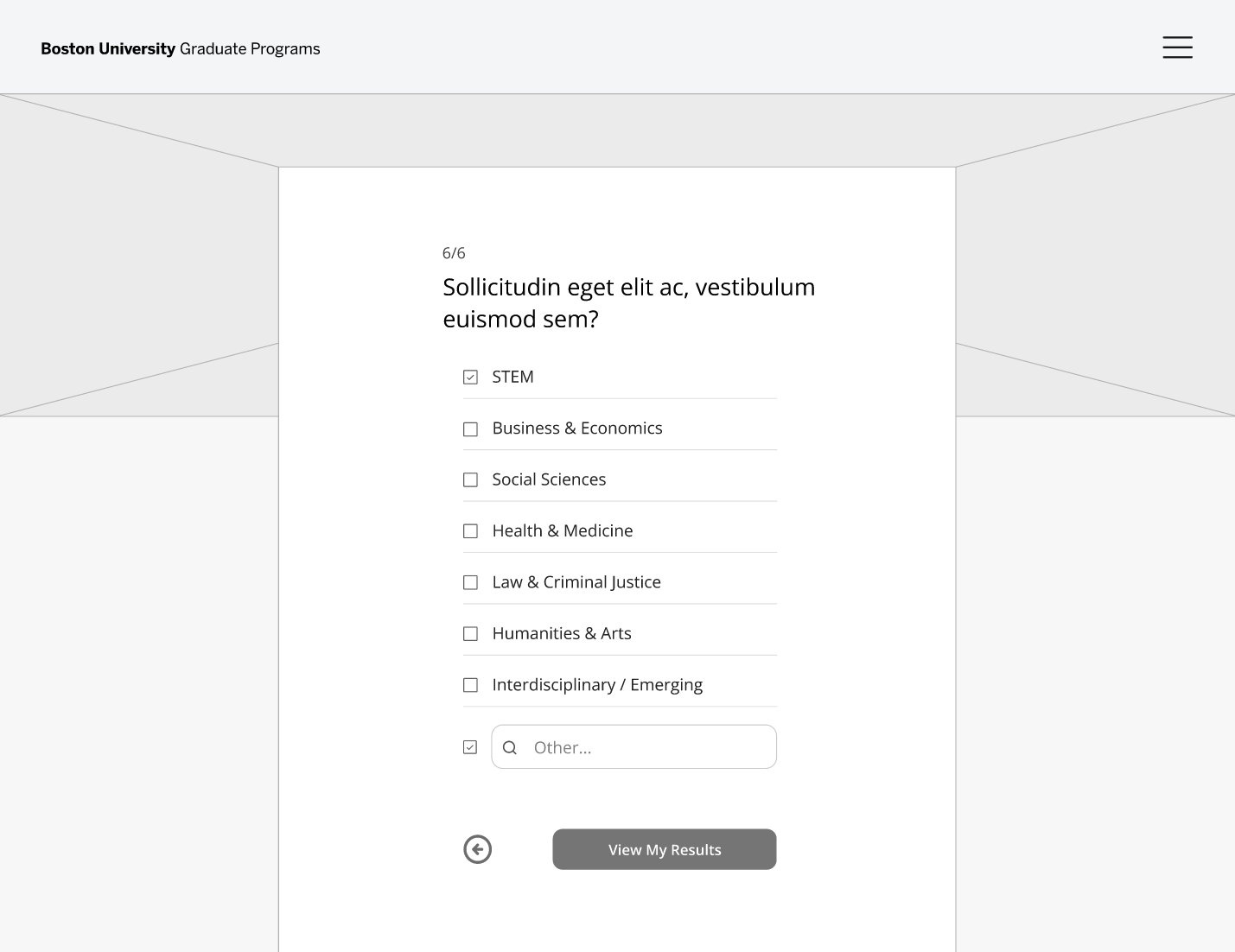
A lightweight questionnaire introduces an approachable way for students to explore their goals and priorities.
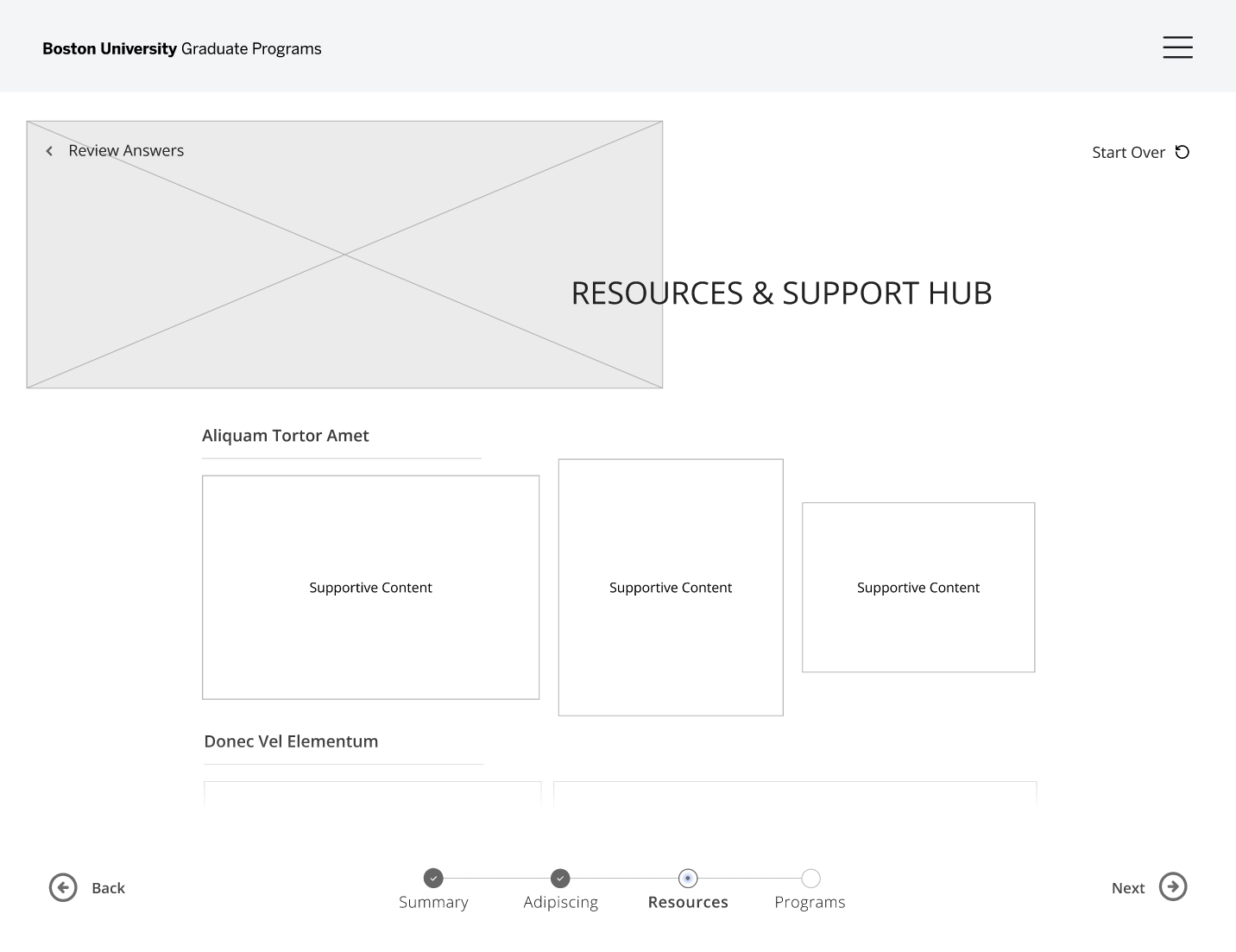
[IMAGE 07 — PERSONALIZED RESULTS]
Show the desktop student profile and personalized results screens. Feature the priority visualization and supportive resources.
Suggested caption: Personalized insights and contextual resources help students better understand their options and potential next steps.
[IMAGE 08 — PROGRAM DISCOVERY]
Show the program match wireframes, including recommended programs, comparison functionality, and opportunities to connect with admissions.
Suggested caption: Relevant program recommendations create a natural transition from early exploration to more directed academic discovery.
Translating Strategy Into Design
Following the collaborative discovery and concept development process, our lead designer developed desktop and mobile wireframes under my direction.
These wireframes brought the emerging experience strategy into focus, demonstrating how students could move from initial questions to personalized insights, supportive content, and program exploration.
The work also helped connect strategic decisions to practical interface considerations, including information hierarchy, interaction patterns, navigation, and responsive behavior.
What began as a series of conversations had evolved into a tangible experience concept that both teams could evaluate and refine.
[IMAGE 09 — RESPONSIVE EXPERIENCE]
Create a large desktop-and-mobile composition using the actual wireframes. Feature the questionnaire, personalized profile, and program results across screen sizes.
Suggested caption: Responsive wireframes translate the collaborative experience strategy into a connected journey across desktop and mobile devices.
The Outcome
The process established a shared strategic direction for a proposed graduate exploration experience and produced desktop and mobile wireframes informed by research and collaborative stakeholder input.
More importantly, it demonstrated the value of bringing stakeholders directly into the creative process.
By creating space for open discussion, challenging assumptions, and building on discoveries together, we were able to move from a broad institutional challenge toward a focused, user-centered solution.
The result was more than a set of wireframes. It was a shared understanding of the problem, a collaboratively developed direction, and a foundation for the next stage of design and development.